
Long-acting dosage forms have to work at more than one level. The formulation must produce the intended release profile, while the manufacturing process has to preserve that performance as the program moves into larger batches, clinical supply, and eventual commercial manufacturing.
ProMed Pharma works with pharmaceutical and biotechnology companies developing implantable and injectable drug delivery systems for extended release. We can enter during early feasibility or later when a program needs formulation development, analytical-method development, process development, tech transfer, scale-up, or production support.
Contact Us
Development and manufacturing support for long-acting dosage forms
Programs reach ProMed at different stages. Some begin with an API, a clinical need, and an early target product profile. Others arrive with an existing formulation or process that needs to be transferred, refined, scaled, or prepared for more controlled production.

Drug product feasibility
At the feasibility stage, we evaluate whether the proposed formulation, materials, processing approach, and release objectives are technically workable together.
That may include formulation advice, R&D analytical-method development, and proof-of-concept work. The findings help identify where the formulation or process still needs refinement before the program advances.
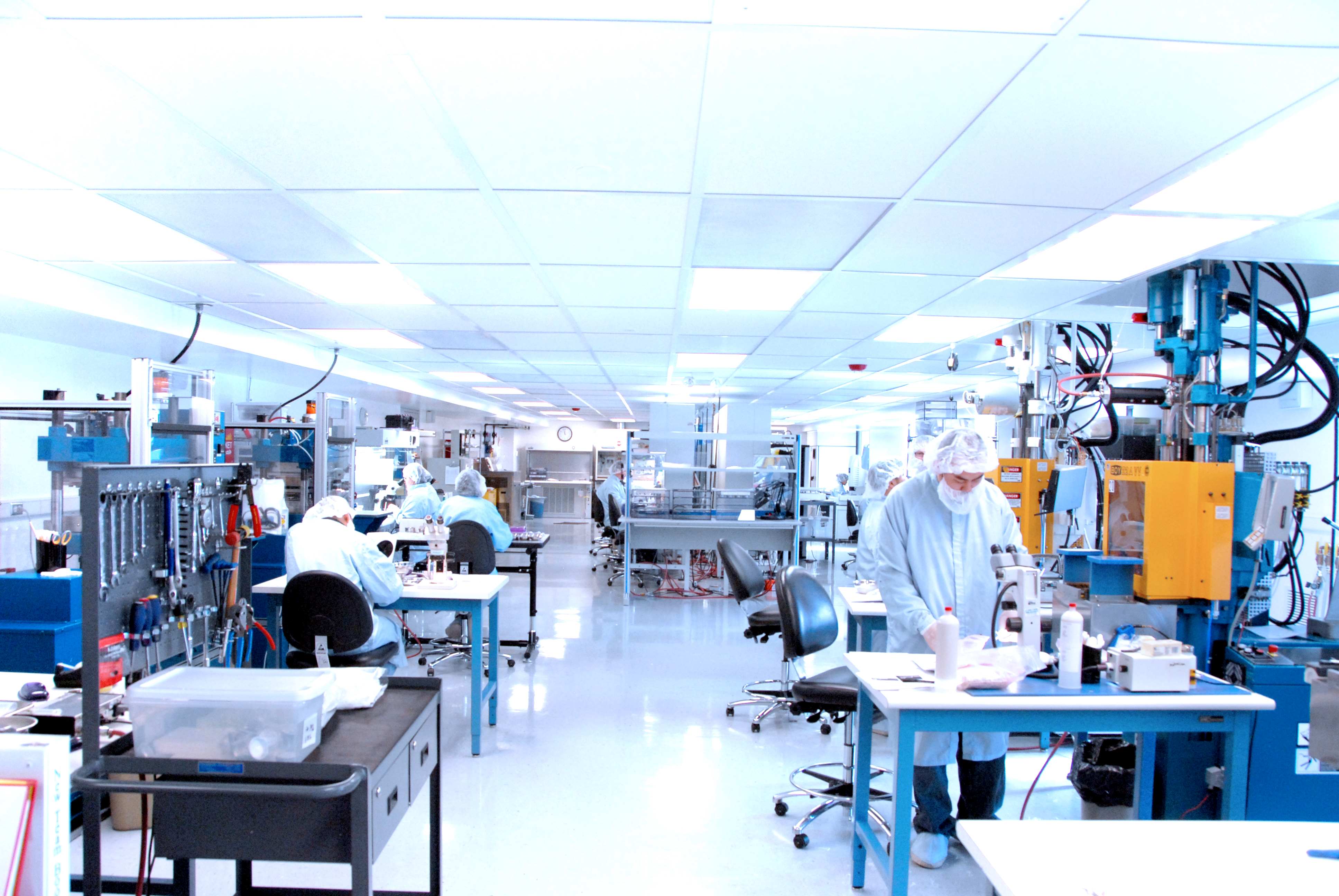
Tech transfer, optimization, and scale-up
When a program arrives with an existing formulation and process, tech transfer may involve moving that work into more production-representative equipment and conditions, then refining the process for the next stage.
That work can include process optimization, preliminary specifications, draft batch records, assembly and packaging planning, analytical-method pre-validation, and scale-up toward preclinical, clinical, or later-stage requirements.

Analytical and stability testing
Long-acting dosage forms require methods that characterize both the formulation and its release behavior. Our analytical team works with formulation and manufacturing personnel so method development stays connected to the dosage form and process.
Our analytical work can include drug assay, impurity testing, content uniformity, real-time and accelerated in-vitro elution, stability work, and phase-appropriate method validation. We also perform lot-release testing and coordinate specialized outside testing when required.
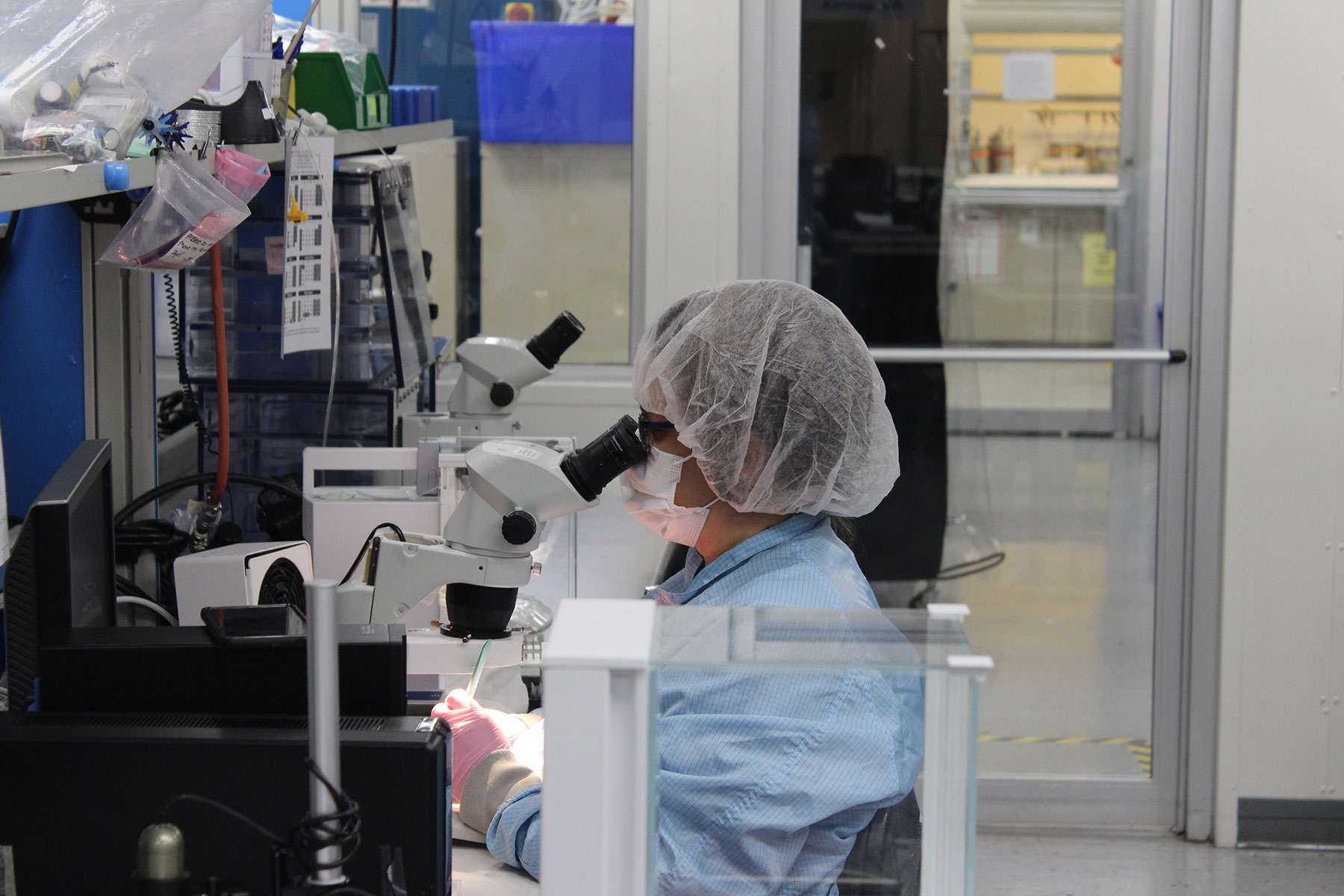
cGMP manufacturing
Once the manufacturing process has been finalized, ProMed documents how that process will be run under cGMP conditions. Batch records and SOPs define the production steps, while material and release specifications, process parameters, and testing establish the controls used to produce and evaluate each batch.
Those controls carry the process established during development into controlled production and give the manufacturing team defined instructions for running and evaluating each batch.
Device assembly, packaging, and sterilization
For dosage forms that require additional downstream operations, our role can continue beyond the manufacture of the drug-loaded component.
That may include assembly into applicators or insertion devices, primary packaging, secondary processing, and sterilization coordination. When sterilization is required, we coordinate with external providers as part of the broader production plan.
Long-acting dosage forms and manufacturing technologies
Long-acting dosage forms do not all create the same manufacturing problem. An implant may depend on how a polymer behaves through molding or extrusion, while an injectable microsphere system brings a different set of formulation and particle considerations.
ProMed works across these different dosage forms and manufacturing approaches, including polymeric implants, other inserted dosage forms, and injectable microsphere systems.
Polymeric implants and inserted dosage forms
For implantable and inserted products, the manufacturing route depends on the material system and the geometry of the dosage form.
Injection molding can accommodate more complex shapes in silicone and thermoplastic systems, while extrusion is frequently used for rod-like ophthalmic and subcutaneous implants.
Our extrusion work can also include API/polymer twin-screw compounding, microextrusion, and coextrusion when the formulation calls for it.
Long-acting injectable microspheres
Microspheres bring a different set of formulation and processing questions. Particle size, morphology, drug loading, suspension behavior, injectability, and release kinetics all have to be considered together; changes in particle characteristics can affect both administration and release behavior.
ProMed develops and manufactures sustained-release PLGA microsphere systems. Because the API and target release profile shape both particle characteristics and processing, microsphere design and process development have to stay connected.
Controlled-release polymer systems
Polymer choice affects both release behavior and how the dosage form can be processed.
Silicone, EVA and other thermoplastics, and PLGA-based systems each behave differently during processing. Their mechanical properties, degradation behavior, and compatibility with the API all influence whether they’re suitable for a given dosage form.
The right polymer for controlled release depends on the API, dosage form, target release profile, and the conditions the formulation can tolerate during processing.
Potent API handling
Some sustained-release products bring another constraint: the API itself may require additional containment during compounding and downstream processing.
We’ve worked with dozens of high-potency APIs from early formulation through registration-batch manufacturing. For critical processing operations, custom isolators may be used to contain equipment and limit personnel exposure below established limits.
What changes as a long-acting program moves toward production
A formulation that performs as intended during feasibility may still need refinement as the program moves into larger batches and more production-representative equipment and conditions.
As that happens, the team may need to revisit several variables together:
- Polymer system and API properties, including particle size and morphology
- Drug loading and the mixing or compounding approach
- Processing temperature and pressure
- Dosage-form geometry
- Equipment and manufacturing scale
Changes in any of these areas can affect content uniformity, stability, manufacturability, and release behavior. Those effects need to be understood as the process is refined for later-stage production.
Keeping that work coordinated is part of moving the program forward. Each project is led by a dedicated project manager who serves as the central point of contact, while stage-gate reviews give the team defined points to assess project risk and manufacturability as development advances.
That coordination helps carry the formulation and process forward without losing sight of the performance established earlier in development.
Frequently Asked Questions
What is a long-acting injectable?
A long-acting injectable is a parenteral dosage form designed to release an API over an extended period rather than delivering the full dose immediately. One example is a sustained-release PLGA microsphere system, which ProMed develops and manufactures.
What long-acting dosage forms does ProMed work with?
ProMed’s experience includes polymeric ophthalmic and subcutaneous implants, other inserted dosage forms, and injectable microsphere systems. The material and manufacturing process depend on the API, how the drug needs to be released and administered, and the geometry of the dosage form.
When should a CDMO become involved in a long-acting program?
There isn’t one required handoff point. ProMed can become involved during early feasibility, take on a program after substantial development through tech transfer, or support scale-up, clinical supply, and later-stage production as the program advances.
Can ProMed accept a program through tech transfer?
Yes. If an established formulation or process already exists, ProMed can bring that work into more production-representative equipment and conditions, then refine and scale the process as needed for the next stage.
What analytical testing is important for extended-release dosage forms?
Analytical work needs to characterize both the dosage form and how the drug is released over time. Depending on the stage, that can include assay, impurities, content uniformity, real-time and accelerated in-vitro elution, stability testing, and phase-appropriate method validation.
How can scale-up affect a long-acting formulation?
As equipment and batch size change, process conditions established earlier in development may need to be revisited. Changes in mixing or compounding, temperature, pressure, or dosage-form geometry can affect content uniformity, stability, manufacturability, and release behavior.
Discuss your long-acting program with ProMed Pharma
Early in development, the formulation, target release profile, and manufacturing approach may still be taking shape. A later-stage program may arrive with an established formulation and process that need to be transferred, refined, or scaled for the next stage.
If you’re evaluating an injectable or implantable dosage form for extended release, contact ProMed Pharma online or call (763) 331-3800 to discuss the technical requirements for the next stage.