
In polymeric drug delivery, the API and polymer have to work as a system. Their interaction, along with dosage-form design, influences how the product can be manufactured and how the drug is released over time. Depending on the program, that may mean an implant, an inserted or injectable dosage form, or a drug-device combination product.
ProMed Pharma works where formulation and manufacturing meet. We look at how the API and polymer behave together, what processing conditions the formulation can tolerate, and how release will be characterized. That approach keeps early formulation and process decisions connected to what the product will eventually require in manufacturing.
Polymeric drug delivery technologies at ProMed
Different dosage forms place different demands on the polymer and the manufacturing process. A molded component, an extruded implant, and an injectable microsphere system each bring their own formulation and processing questions.
That’s why our work spans both polymer systems and the manufacturing processes used to turn them into finished dosage forms.
Polymers for controlled release
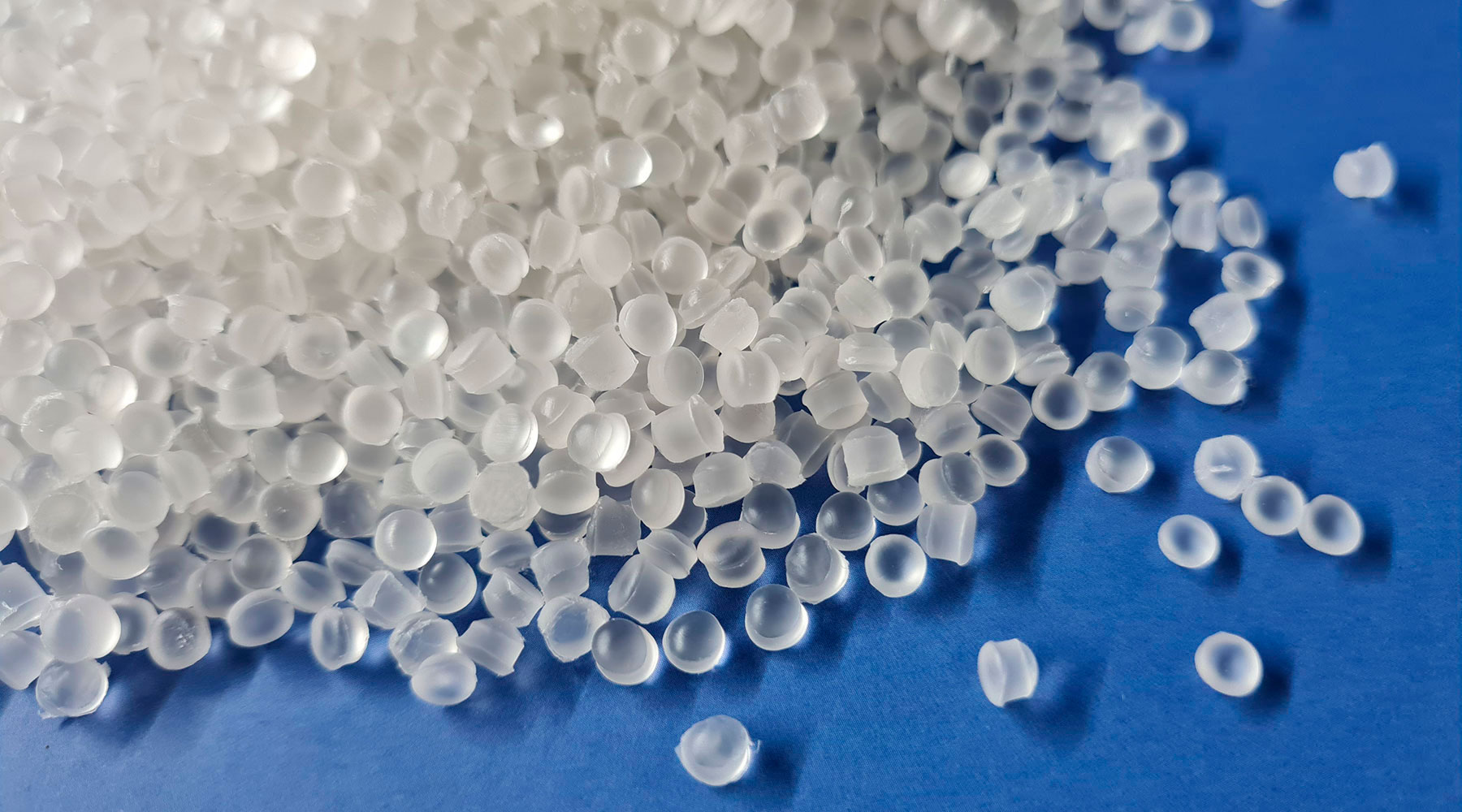
Silicone, EVA, PLGA, and other polymer systems bring different strengths and constraints to drug delivery. Release behavior is only part of the decision.
API compatibility, processing conditions, mechanical requirements, biodegradation, and the intended dosage form all influence which material makes sense for a given formulation.
Injection molding
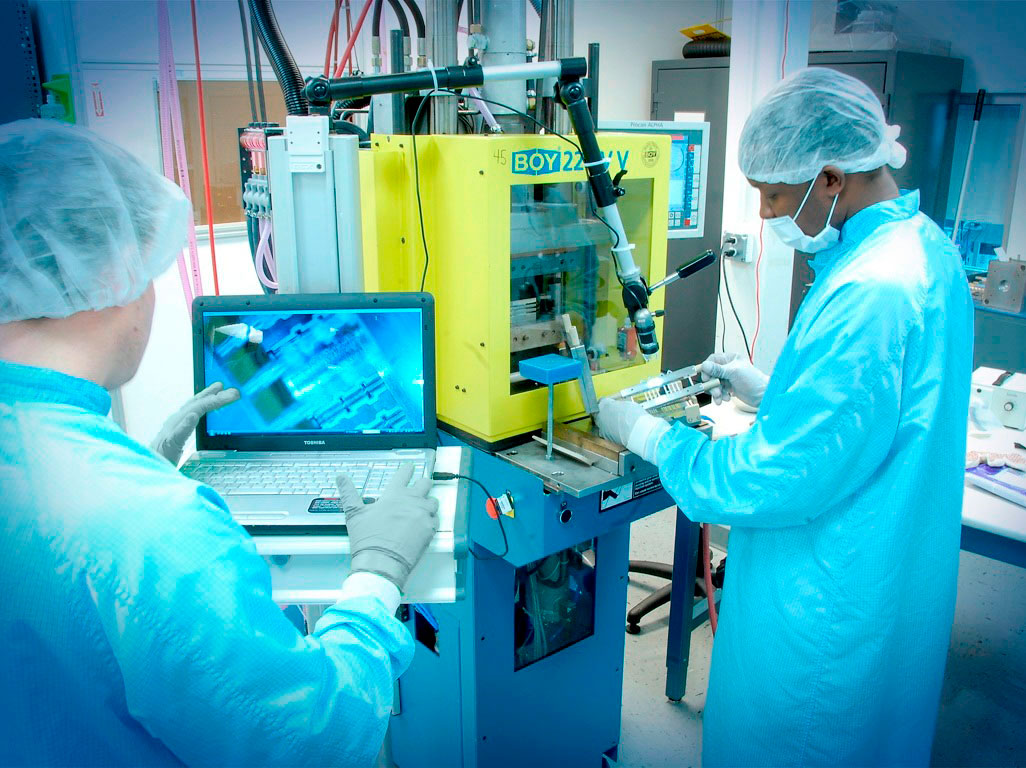
With molded drug products, the manufacturing process can directly affect product performance. API particle size, mixing, cure or processing temperature, pressure, and geometry can influence content uniformity and release consistency.
We develop silicone and thermoplastic molding processes around those interactions, keeping formulation requirements connected to the process as development advances.
Extrusion
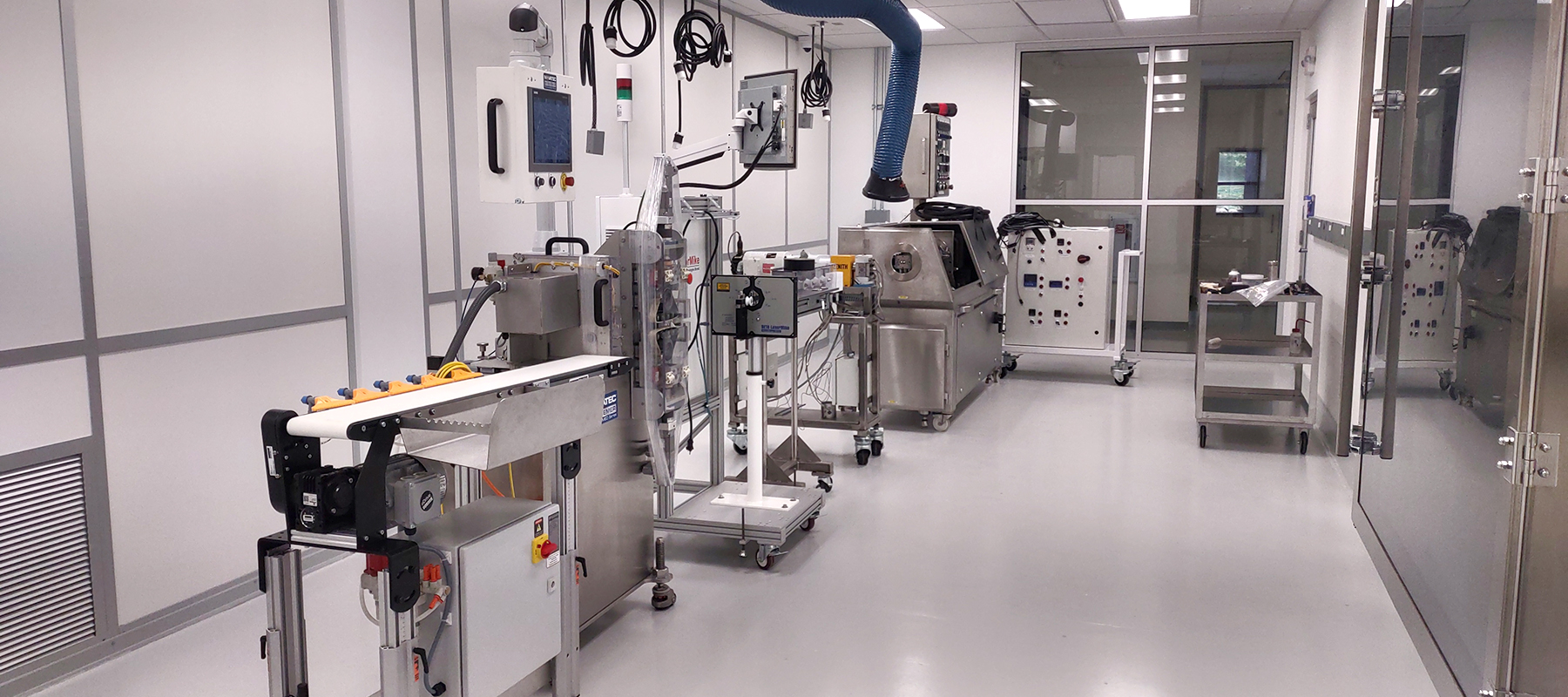
Extrusion is frequently used for rod-like dosage forms such as ophthalmic and subcutaneous implants. Our extrusion work includes API/polymer twin-screw compounding, microextrusion, and coextrusion.
When the formulation calls for it, coextrusion of a drug-free overmolded layer can also be used to influence release behavior.
Drug-eluting microspheres
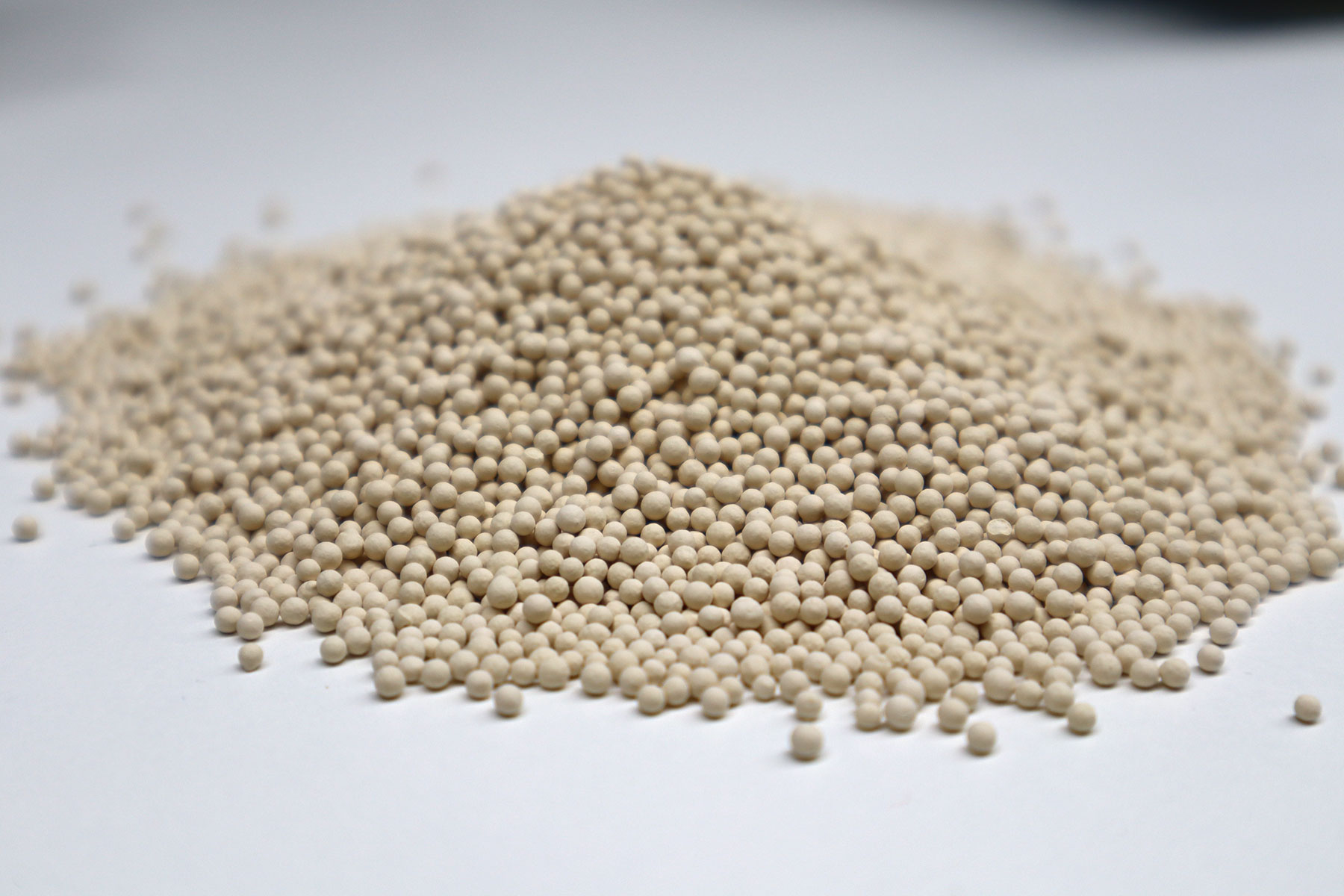
Microspheres introduce a different set of formulation and manufacturing questions. Particle size, morphology, drug loading, suspension behavior, injectability, and release kinetics all have to work together.
ProMed develops and manufactures sustained-release microsphere systems, including PLGA formulations. Our microsphere capabilities include particle sizes of approximately 2 to 50 microns and engineered release profiles ranging from approximately three days to more than 180 days.
Potent API handling
Some sustained-release dosage forms involve highly potent APIs, which changes the handling strategy during development and manufacturing. We’ve worked with dozens of high-potency APIs from early formulation through registration-batch manufacturing.
For critical processing operations, we use custom isolators designed and tested to limit personnel exposure below established limits.
How polymers influence controlled drug release
Polymer composition and API properties work together to influence how a drug is incorporated into the dosage form and released over time. Material selection is therefore part of the formulation strategy from the beginning.
Those variables interact throughout development. Polymer composition, API properties and particle size, drug loading, mixing or compounding, processing temperature, pressure, geometry, particle morphology, and manufacturing scale can affect content uniformity, stability, manufacturability, and release behavior.
Formulation and manufacturing have to be considered together. A formulation that produces the desired release behavior during feasibility may still require refinement as the process, equipment, and batch scale become more representative of clinical or commercial manufacturing.
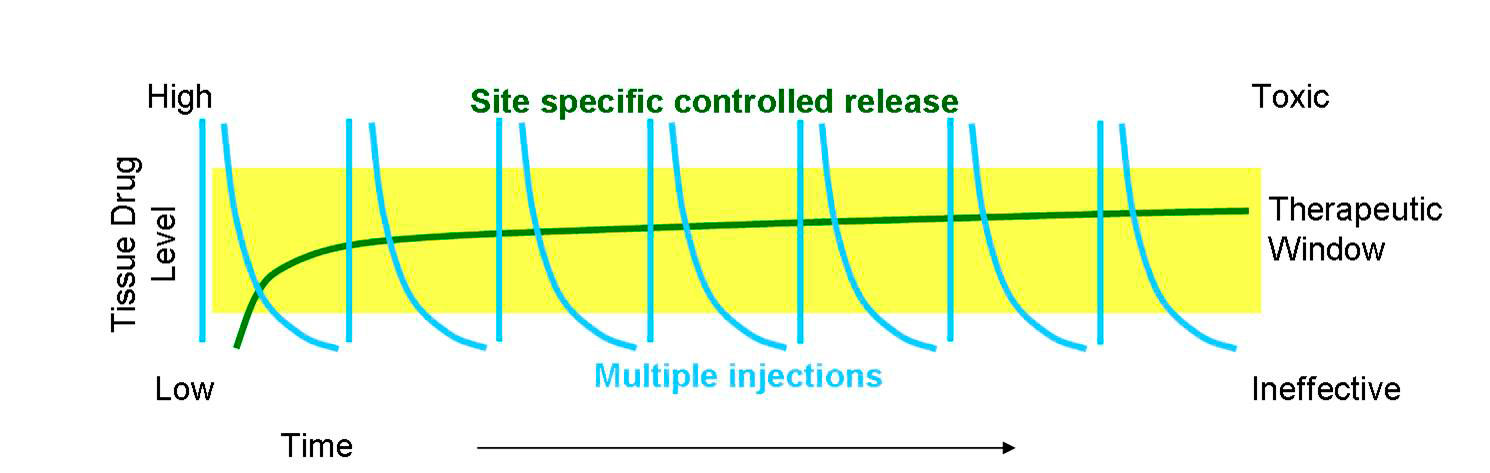
For some products, polymeric delivery systems can also support sustained or site-specific administration. Extending drug release over time may reduce the frequency of administration compared with an immediate-release approach. The actual release profile and any clinical benefit depend on the specific product, API, formulation, and supporting evidence.
Idealized comparison of tissue drug levels for injections compared with an implantable drug delivery device. Clearance of the drug after an injection may result in significant time outside of the therapeutic window.
Polymeric dosage forms and applications
Our polymer drug-delivery work extends beyond any one type of implant or device. That work includes:
- Ophthalmic and subcutaneous implants
- Intravaginal rings
- Intrauterine devices
- Injectable microsphere systems
- Drug-device combination products
Each format brings a different set of development requirements. Ophthalmic products, for example, may place tight constraints on implant dimensions and drug payload, while long-acting injectable microspheres introduce considerations around particle size, morphology, injectability, and suspension behavior.
Those product requirements drive material selection and manufacturing strategy.
From drug product feasibility through manufacturing
ProMed can enter a polymeric drug delivery program during early feasibility or later in development when additional formulation, analytical, process, tech-transfer, or manufacturing support is needed.
Early work may include formulation feasibility, R&D analytical-method development, and proof-of-concept activities. As the program advances, the focus can shift toward process development, optimization, preliminary specifications, stability work, and scale-up.
For programs moving into manufacturing, support can extend to clinical manufacturing, cGMP documentation and controls, assembly and packaging, sterilization coordination, and commercial manufacturing where appropriate.
That continuity carries formulation and process knowledge forward as the dosage form moves into larger-scale, more controlled manufacturing for clinical use.
Frequently Asked Questions
What is polymeric drug delivery?
Polymeric drug delivery uses polymers to control how an API is incorporated into a dosage form and released over time. Depending on the product, these systems can support sustained or site-specific delivery through implants, injectable microspheres, inserted dosage forms, and combination products.
Which polymers are used for controlled drug release?
ProMed works with silicone, EVA and other thermoplastics, PLGA, and other biodegradable or bioresorbable polymer systems. The appropriate polymer for controlled release depends on the API, dosage form, processing conditions, and target release profile.
How do polymers control the release of an API?
Release behavior depends on the polymer system, drug loading, API properties, geometry, and processing conditions. Durable polymers such as silicone and EVA can support sustained release, while biodegradable materials such as PLGA can provide controlled release as the polymer degrades by hydrolysis.
What dosage forms can use polymer-based drug delivery?
Our experience includes ophthalmic and subcutaneous implants, intravaginal rings, intrauterine devices, and injectable microspheres, as well as components for drug-device combination products. Each format brings different requirements for drug payload, release duration, geometry, mechanical properties, and the manufacturing process.
How do molding, extrusion, and microspheres differ for drug delivery?
Injection molding can produce drug-loaded components with more complex geometries. Extrusion is frequently used for rod-like implants, while drug-eluting microspheres provide an injectable approach to sustained release.
When should a CDMO become involved in a polymeric drug delivery program?
A CDMO can become involved during early feasibility or later in development. ProMed can support formulation, analytical development, process development, tech transfer, scale-up, clinical manufacturing, and commercial manufacturing, depending on where the program needs additional support.
Discuss your polymeric drug delivery program with ProMed
The right polymer and formulation depend on the API, target release profile, and dosage form. Those choices also have to work within the processing conditions, equipment, scale, and controls the product will require as development advances.
If you’re evaluating feasibility, refining a process, planning a tech transfer, or preparing for scale-up, contact ProMed Pharma or call (763) 331-3800 to discuss the technical requirements.